Learning Outcomes
i. Identify what chromatin is and its composition.
ii. Understand the structural organization of chromatin in cells.
iii. Recognize how chromatin structure affects gene expression and regulation.
i. Understanding Chromatin
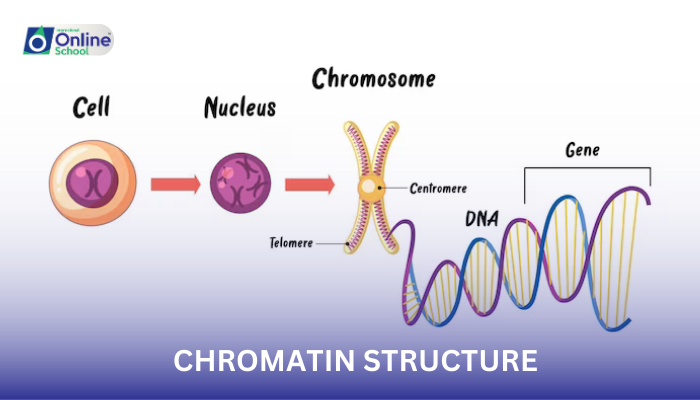
Chromatin is a complex of DNA and protein found in eukaryotic cells. Its primary function is to package long DNA molecules into more compact, dense structures, facilitating their fit within the cell nucleus. This complex substance not only provides structural support to the DNA but also plays a pivotal role in gene regulation.
ii. Composition of Chromatin
The fundamental unit of chromatin is the nucleosome, which consists of a segment of DNA wound in sequence around eight histone protein cores. This winding reduces the volume of DNA and organizes it into a compact structure. Histones are positively charged proteins that associate easily with the negatively charged DNA molecule, allowing the DNA to wrap around them.
iii. Structural Organization of Chromatin
Chromatin's structure can be broadly classified into two forms:
Euchromatin: This is the less condensed form of chromatin and is generally rich in gene concentration. It is often found in the cell's nucleus where active gene transcription takes place. Because of its loose packing, the transcription machinery can easily access the DNA, allowing genes to be expressed.
Heterochromatin: This is the highly condensed form of chromatin, which is transcriptionally inactive. The tight structure limits the access of the transcription machinery to the DNA, thus repressing gene expression.
iv. Chromatin and Gene Regulation
The organization of chromatin is dynamic and changes in response to various cellular signals. The accessibility of chromatin is a major regulatory mechanism of gene expression. When the chromatin is loosely packed (euchromatin), the genes are more accessible to the machinery that carries out transcription. Conversely, when it is tightly packed (heterochromatin), the DNA is less accessible, and the genes are less likely to be transcribed.
Chemical modifications to the histones and DNA itself can influence chromatin structure and thus gene expression. For example, acetylation of histone tails generally results in a more open chromatin structure, enhancing transcriptional activity. Methylation can lead to either activation or repression of transcription, depending on the specific amino acids in the histones that are modified.
In summary, chromatin is not just a static scaffold for DNA. Its composition and organization are critical for the regulation of gene expression and ensure that genes are expressed at the right place and time, thus playing a crucial role in the proper functioning and development of organisms. Understanding chromatin structure helps explain how gene expression is controlled and how it can be altered in various diseases.
